
Reinventing a Forest Legacy
For centuries, the Mahua tree (Madhuca longifolia) has been more than just a forest species — it has been a symbol of life itself. Its blossoms have filled kitchens, soothed hunger, and sweetened every celebration across India’s forest regions. Yet, outside these areas, Mahua was reduced to a single identity — the tree that makes liquor.
That narrow image hid a deeper truth. Long before distillation, Mahua flowers were food — a source of strength, sweetness, and sustenance. Today, that truth is returning. Across tribal villages, food labs, and self-help groups, Mahua is being reintroduced as a functional food — in forms such as nectar, laddoos, cookies, pachak, and herbal teas.
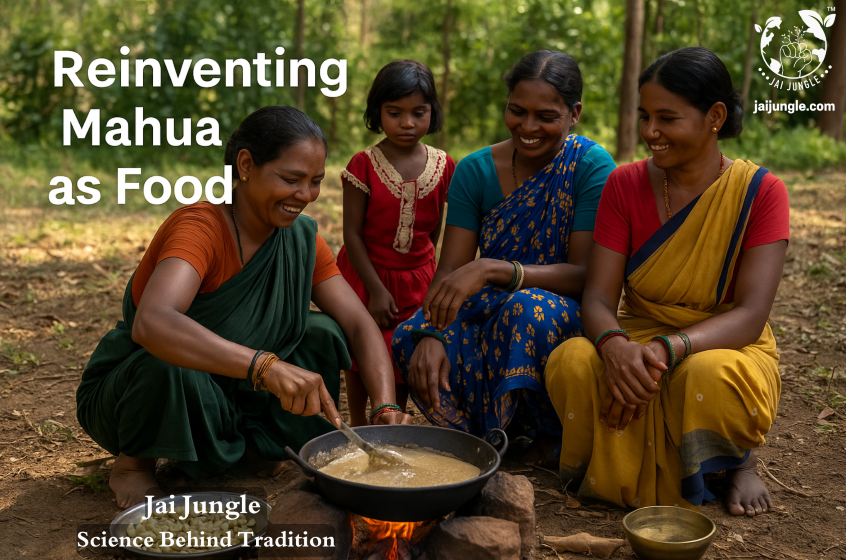
This is not a reinvention, but a restoration — of dignity, nutrition, and livelihood. The story of how Mahua is once again finding a place on dining tables begins with the people who never forgot it: the tribal women who continue to collect, dry, and process this forest flower with care.
From Tribal Kitchens to Modern Food Products
In Jashpur and neighboring districts, families still make Mahua dalia, pachak, and herbal infusions every summer. Watching those practices closely, the Jai Jungle Farmers Producer Company realized something simple yet powerful — Mahua never needed to be rediscovered, only reintroduced.
For the women who work with Jai Jungle, Mahua is not an ingredient but a way of life. They gather flowers, clean and shade-dry them, and transform them into nutritious, non-alcoholic foods that merge tribal authenticity with modern food standards.
This shift — from “Mahua = liquor” to “Mahua = nutrition + culture + innovation” — lies at the heart of a quiet revolution taking place in India’s forest economy.
Mahua Nectar — A Sweetener That Nourishes
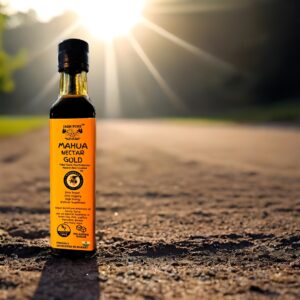
Mahua Nectar is a concentrated syrup made from fresh or shade-dried blossoms. Unlike liquor, this process involves no fermentation. The flowers are carefully cleaned, reduced at controlled temperatures, and sealed — retaining their original sugars, minerals, and vitamins.
Nutritional Value (Per 100 g)
| Nutrient | Amount |
|---|---|
| Carbohydrates | 68.0 g |
| Protein | 3.80 g |
| Energy | 287.2 kcal |
| Dietary Fiber | 1.73 g |
| Fat | < 1.0 g |
| Sodium | 48.3 mg |
| Iron | 8.1 mg |
| Calcium | 75.0 mg |
| Natural Sugar (from Mahua flower) | 50.21 g |
| Magnesium | 70.4 mg |
| Potassium | 421.5 mg |
| Zinc | 3.18 mg |
| Vitamin C | 18.19 mg |
| Vitamin A | 25.31 µg |
Unlike refined sweeteners that offer “empty calories,” Mahua Nectar provides energy with nutrients.
The iron supports blood health, magnesium helps muscles recover, zinc builds immunity, and Vitamin C improves absorption of iron — making it an ideal sweetener for both rural and urban diets.
Mahua Flower Composition
Scientific studies show that Mahua flowers are nutritionally rich:
Protein: 4.4–7 % in dried form
Fat: ~0.5 %
Total Sugars: ~54 g / 100 g (sucrose + glucose + fructose)
Minerals: Calcium, Iron, Phosphorus, and Zinc
Carotene (Vitamin A precursor) and polyphenols contributing antioxidant properties
Energy Value: ~300 kcal / 100 g
(Ahirwar et al., JETIR 2018; Singh et al., 2020; PNR Journal 2021)
These data confirm what tribal elders have always known — Mahua is food that heals and sustains.
Comparison: Mahua Nectar vs Honey vs Maple Syrup
| Nutrient (per 100 g) | Mahua Nectar | Honey | Maple Syrup |
|---|---|---|---|
| Energy (kcal) | 287 | 304 | 260 |
| Total Sugars (g) | 50.21 | 82 | 60 |
| Iron (mg) | 8.1 | 0.4 | 0.1 |
| Calcium (mg) | 75 | 6 | 102 |
| Vitamin C (mg) | 18.19 | 0 | 0 |
| Magnesium (mg) | 70.4 | 2 | 21 |
| Zinc (mg) | 3.18 | 0.2 | 0.1 |
Insights:
Mahua Nectar has far higher iron, zinc, and magnesium content.
It contains natural Vitamin C, absent in both honey and maple syrup.
Slightly lower sugars → lower glycemic load.
Maple offers more calcium, but Mahua’s overall mineral balance is stronger.
👉 In essence: Mahua Nectar is both sweetener and supplement, making it suitable for everyday health-focused diets.
Jams & Preserves — Forest Flavour Meets Fruit
Mahua’s floral sweetness pairs beautifully with tropical fruits like mango, guava, jamun, and berries.
Natural sugars enhance texture & spreadability.
No need for synthetic preservatives — Mahua’s own sugar acts as stabilizer.
Polyphenols and antioxidants improve color and shelf-life.
Such forest-fruit fusions connect rural produce to gourmet markets — much like hibiscus or acai once did.
Cookies, Laddoos & Functional Bakes
Powdered or dried Mahua blossoms replace 20–30 % refined sugar while adding trace minerals.
Parmar (2020): Wheat laddoos enriched with Mahua flowers scored highest for taste and energy.
Mahua + Jaggery + Seeds laddoos serve as energy bites for students and farmers.
Baking trials show Mahua enhances aroma and softness in cookies and cakes naturally.
In short, what used to be a farmer’s lunch sweet can now fit neatly into an urban fitness bar.
Herbal Teas & Infusions
Steeping shade-dried Mahua petals with Tulsi, Lemongrass, or Green Tea creates a naturally sweet, caffeine-free brew.
Antioxidant-rich and cooling (sheeta virya in Ayurveda)
Helps with mild acidity and stress
Ideal as a post-meal digestive
This makes Mahua Tea a homegrown alternative to chamomile or rooibos — with its own Indian forest identity.
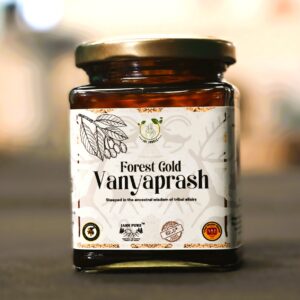
ForestGold Vanyaprash — 100 % Mahua Traditional Sweet
To make Mahua easy for everyday use, Jai Jungle developed ForestGold Vanyaprash — a smooth, 100 % Mahua-based sweet inspired by traditional paak recipes.
Steady energy from natural sugars
Iron, Magnesium, Potassium, Zinc, Vitamin C in natural form
No grains, fillers, or preservatives
Simple: 1–2 tsp daily on toast, with milk, or as post-workout fuel
It’s the easiest way to bring Mahua nutrition into modern life, maintaining the same gentle sweetness that once powered farmers through long days.
Women-Led Processing & Forest Economy
In Jashpur, Chhattisgarh, trained tribal women handle the entire value chain — from collection to packaging.
This ensures:
Income stays local
Trees stay standing (only flowers harvested)
Food safety & quality are maintained
The result is a forest-to-food model where sustainability and dignity go hand-in-hand.
Challenges & Opportunities
| Issue | Opportunity / Way Forward |
|---|---|
| Public still equates Mahua with liquor | Awareness campaigns & tasting events showing Mahua as food |
| Excise confusion for food use | Clear FSSAI guidelines for “food-grade Mahua” |
| Variable drying quality | Use shade-drying nets & solar dryers for consistency |
| Limited urban visibility | Position Mahua alongside honey & jaggery as India’s forest sweetener |
Handled with care, Mahua can anchor a new category of indigenous functional foods — clean, ethical, and empowering.
Field Practice: Why Shade Drying Matters
Sun-drying on bare ground often bleaches color and causes microbial growth.
Using bamboo racks or nets under shade keeps natural sugars, aroma, and color intact while improving shelf-life.
AESA extension papers confirm this simple change significantly improves quality and income for collectors.
Is Mahua Really a Superfood?
The term superfood is modern marketing, but Mahua’s nutrition is traditional truth.
Dried flowers provide protein (~6 %), iron (8–14 mg/100 g), natural sugars (~50 g), and Vitamin C — a rare combination in any sweetener.
Studies show antioxidant & anti-inflammatory effects supporting metabolism and immunity.
(Singh et al., 2020; Ahirwar et al., 2018)
So whether in nectar, laddoo, or Vanyaprash form — Mahua earns its place as India’s original forest superfood.
Kitchen Ideas to Try
Mahua Lemon Sharbat: 1 tsp Nectar + cold water + lemon juice + pinch rock salt
Mahua Millet Porridge: Add Vanyaprash to ragi porridge for natural sweetness
Mahua-Nut Spread: Mix Vanyaprash + peanut butter for school tiffins
Mahua Fruit Bowl: Drizzle Nectar over banana or guava, top with seeds
Mahua Tea: Steep 4–5 petals with tulsi; no sugar needed
A Sweet Future for Mahua
Mahua’s journey from forgotten forest flower to functional food is more than product innovation — it’s cultural renewal.
Compared to honey and maple syrup, Mahua offers 35× more iron, 70× more zinc, and natural Vitamin C.
With its roots in tribal heritage and its branches reaching modern health trends, Mahua truly represents the bridge between tradition and transformation.
Mahua no longer intoxicates — it nourishes.
A flower reborn as food, and a forest reborn as the future.
References
Ahirwar R.K. et al. (2018). Nutritional Composition of Mahua Flower. JETIR 1801080.
Singh V. et al. (2020). Assessment of Antioxidant Activity, Minerals and Chemical Constituents of Mahua Flower and Fruit. Nutrition & Food Science.
Das S.K. (2019). Mahua: A Boon for Pharmacy and Food Industry. IJCS.
Parmar R. (2020). Development of Mahua Flower Enriched Wheat-Based Laddoo.
Down To Earth (2018). “It’s Mahua Season: Hunger Is Non-Existent in Households Which Have This Forest Produce.”
USDA FoodData (2023). Honey & Maple Syrup Nutrient Profiles.
IJOEAR (2025). “Compositional Review of Mahua Flower.”
PNR Journal (2021). “Proximate Composition of Mahua Flour.”
AESA (2020). Value Addition & Nutrition through Mahua Flower Processing.
Handpicked for You
-
Sale!
 Mahua Heritage Collection
Mahua Nectar Gold
Rated 0 out of 5₹699.00Original price was: ₹699.00.₹655.00Current price is: ₹655.00. INR Add to cart -
Sale!
 Mahua Heritage Collection
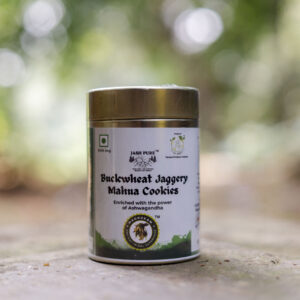
Buckwheat Jaggery Mahua Cookies
Rated 0 out of 5₹175.00Original price was: ₹175.00.₹170.00Current price is: ₹170.00. INR Add to cart -
Sale!
 Forest Sweets & Treats
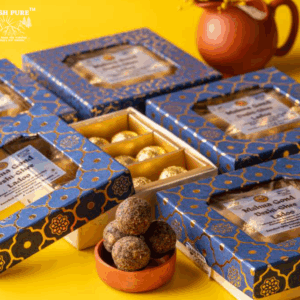
Desi Ghee Mahua Gond Laddoos
Rated 0 out of 5₹350.00Original price was: ₹350.00.₹340.00Current price is: ₹340.00. INR Select options This product has multiple variants. The options may be chosen on the product page -
Sale!
 Mahua Heritage Collection
Forest Gold Vanyaprash – Pure Mahua Wellness Paste
Rated 0 out of 5₹599.00Original price was: ₹599.00.₹575.00Current price is: ₹575.00. INR Add to cart
