
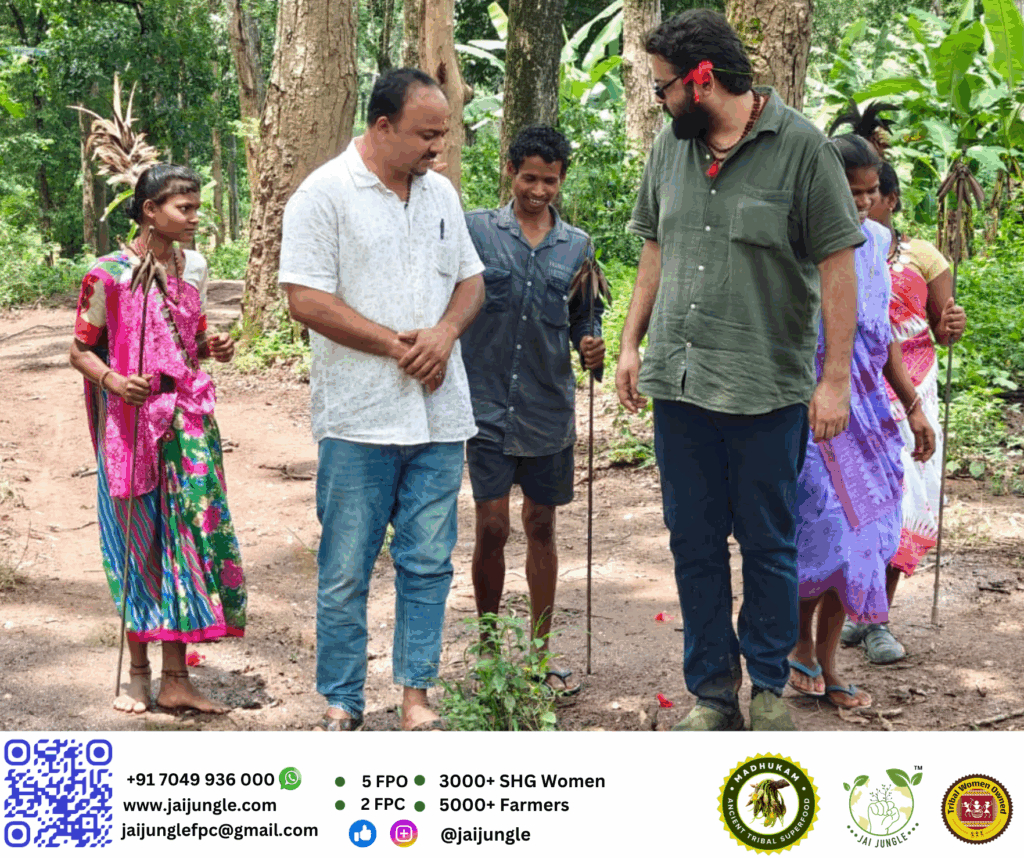
When Food Becomes Faith
For tribal communities across Central and Eastern India, Mahua (Madhuca longifolia) is not just a tree; it is a cosmic presence. Every spring, when the pale-yellow blossoms fall like a carpet on the forest floor, entire villages awaken to a season of joy, rituals, and renewal.
Mahua is worshipped, sung about, danced with, and offered to gods and ancestors. It is fertility, prosperity, and continuity made visible in flower form. To understand Mahua in tribal life is to understand that food is never only about calories — it is also about faith, memory, and belonging.
Ritual Offerings and Sacred Symbolism
Fertility and Life
- In Gond cosmology, Mahua blossoms are associated with fertility. The first flowers are never eaten directly; they are offered to the forest deity before harvest begins.
- In marriages, Mahua laddoos or drinks symbolize sweetness and abundance in the new union. The tree itself is sometimes invoked in blessings for children.
Seasonal Renewal
- For Santhal communities, the arrival of Mahua signals the end of scarcity and the beginning of renewal. Blossoms are gathered in the first communal feast of spring.
- In Muria villages, Mahua flowers are burned as incense in village shrines during seasonal festivals, believed to carry prayers to the gods.
Wealth and Prosperity
- Mahua is also seen as a symbol of wealth. In some Oraon villages, households exchange Mahua products during festivals as tokens of friendship and prosperity.
Mahua Festivals – Celebrating the Bloom
Community Gatherings
When Mahua blooms in March–April, entire villages celebrate. Children wake early to gather flowers; women sing harvest songs; men prepare dances. The forest becomes an open-air festival ground.
Ritual Foods
- Mahua laddoos and porridges are shared in communal meals.
- Fermented Mahua drinks (mild or strong) are consumed during night-long dances, believed to connect people with ancestors.
- In some regions, Mahua oil lamps are lit as offerings, symbolizing light and abundance.
Inter-generational Celebration
Festivals are also moments of education — children learn songs, collection practices, and rituals from elders. Mahua thus becomes a school of culture under the open sky.
Food in Ritual Context – Sacred Nourishment
Mahua is sacralized food. It is eaten not only to sustain the body but to renew bonds with gods, ancestors, and community.
- Marriage Feasts: Mahua laddoos symbolize sweetness in new relationships.
- Ancestor Worship: Liquor or blossoms are offered to ancestors as part of death rituals, feeding both the living and the departed.
- Harvest Rituals: Mahua porridges are distributed to entire villages, emphasizing equality and community strength.
Eating Mahua in rituals is thus an act of collective memory and solidarity.
Songs, Stories, and Art – The Cultural Memory of Mahua
Folk Songs
In Gond and Santhal songs, Mahua is often called “Amma” (mother). Verses describe how Mahua feeds her children when the granaries are empty.
Oral Stories
Myths narrate that Mahua was a gift of the gods to ensure no one in the forest sleeps hungry. Some tales describe spirits that guard the blossoms, punishing greed and rewarding fairness.
Visual Art
- Gond paintings often depict Mahua trees surrounded by animals, birds, and human figures — emphasizing its central role in forest life.
- Santhal wall murals sometimes show Mahua flowers offered to deities, linking aesthetics with devotion.
Mahua is not just a food source — it is encoded in cultural memory and art.
Gender and Mahua Rituals
Mahua rituals often highlight women’s custodianship:
- In many tribes, women inherit rights to Mahua trees.
- Women lead flower collection, drying, and preparation of ritual foods.
- Festivals see women wearing Mahua garlands, dancing, and singing songs that reinforce their role as cultural bearers.
This makes Mahua central not only to food but to gendered knowledge systems.
Decline of Mahua in Ritual Life
Despite its rich symbolism, Mahua’s place in rituals has weakened:
- Colonial excise laws turned Mahua into a “revenue crop,” reducing its sacred role to a taxable liquor source.
- Public Distribution System (PDS) shifted diets toward subsidized rice and wheat, pushing Mahua foods out of daily and ritual life.
- Urban migration and modernization mean younger generations see Mahua as “backward” rather than sacred.
The result is a loss of sacred ecology — where food, forest, and faith were once united.
Reviving Mahua as Cultural Heritage
Today, organizations like Jai Jungle Farmers Producer Company in Jashpur are not only reintroducing Mahua as food but also as cultural heritage. By working with tribal women to create laddoos, teas, and nectars rooted in tradition, Jai Jungle is reviving pride in Mahua as both nutrition and ritual symbol.
This revival ensures that Mahua is not remembered only for liquor, but for its true identity as the sacred flower of the forest.
Conclusion – The Sacred Flower of the Forest
Mahua blossoms are not just food. They are offerings, songs, festivals, and identity. They represent fertility, prosperity, and the unbroken bond between humans and forests.
Reviving Mahua in cultural rituals is not only about saving a food tradition. It is about preserving a way of seeing the world — where nourishment is sacred, and where community survival is celebrated as ritual.
As long as Mahua blooms, it will remain the sacred flower of the forest, binding food, faith, and culture into one living heritage.
References
- India Water Portal (2020). Mahua in tribal food systems.
- Down To Earth (2018). It’s Mahua season: Hunger is non-existent in households which have this forest produce.
- Ahirwar, R.K. et al. (2018). Nutritional composition of Mahua flower. JETIR1801080.
- Singh, V. et al. (2020). Assessment of antioxidant activity, minerals and chemical constituents of edible Mahua flower and fruit. Nutrition & Food Science.
- Gond and Santhal oral traditions; ethnographic fieldwork in Bastar and Odisha.
- Gond art archives featuring Mahua trees in ritual context.
Handpicked for You
-
Sale!
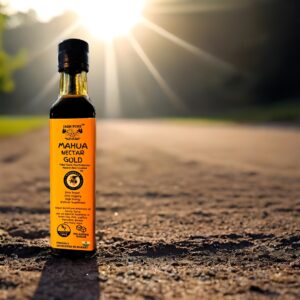 Mahua Heritage Collection
Mahua Nectar Gold
Rated 0 out of 5₹699.00Original price was: ₹699.00.₹655.00Current price is: ₹655.00. INR Add to cart -
Sale!
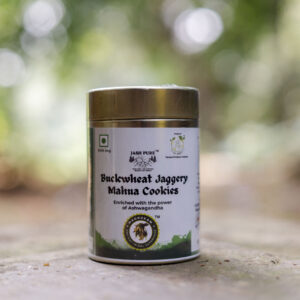 Mahua Heritage Collection
Buckwheat Jaggery Mahua Cookies
Rated 0 out of 5₹175.00Original price was: ₹175.00.₹170.00Current price is: ₹170.00. INR Add to cart -
Sale!
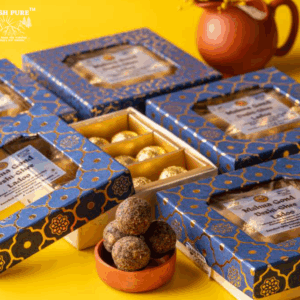 Forest Sweets & Treats
Desi Ghee Mahua Gond Laddoos
Rated 0 out of 5₹350.00Original price was: ₹350.00.₹340.00Current price is: ₹340.00. INR Select options This product has multiple variants. The options may be chosen on the product page -
Sale!
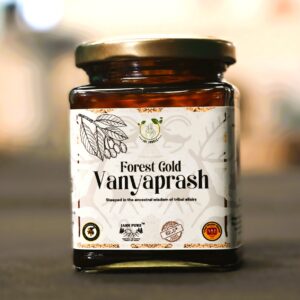 Mahua Heritage Collection
Forest Gold Vanyaprash – Pure Mahua Wellness Paste
Rated 0 out of 5₹599.00Original price was: ₹599.00.₹575.00Current price is: ₹575.00. INR Add to cart
